How to Avoid Phishing Attacks (2026 Guide)
A complete guide to phishing attacks, fake login pages, scam emails, malicious links, and how to stay protected online.
Updated May 2026Reviewed by StaySecureHub Editorial TeamEditorial review
Quick Answer
A complete guide to phishing attacks, fake login pages, scam emails, malicious links, and how to stay protected online. This guide explains the main benefits, risks, and practical steps readers need to stay secure online in 2026.
Quick Summary
- Phishing attacks are becoming more sophisticated in 2026
- Most phishing scams rely on urgency and fake trust
- Fake login pages can steal credentials instantly
- Awareness and security tools dramatically reduce risk
Phishing attacks are one of the most common cyber threats in 2026.
Modern phishing scams are designed to steal passwords, banking information, verification codes, and personal data.
Attackers increasingly use fake websites, AI-generated messages, and impersonation techniques to trick victims.
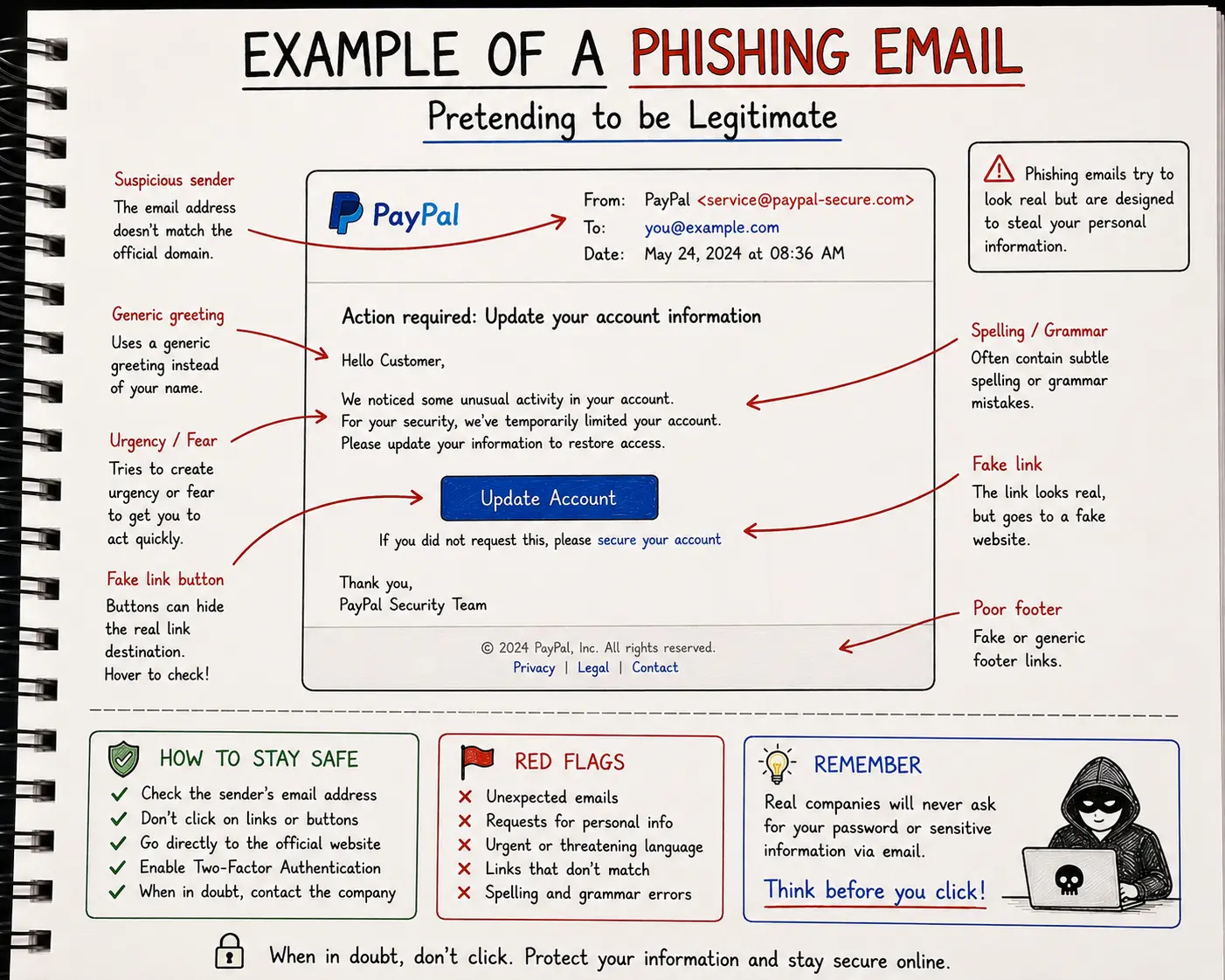
What Is Phishing?
Phishing is a cyberattack where criminals impersonate trusted companies, services, or people to steal sensitive information.
Common phishing targets include:
- Email accounts
- Banking credentials
- Social media accounts
- Payment services
- Cryptocurrency wallets
The goal is usually credential theft, financial fraud, or malware installation.
Most Common Types of Phishing Attacks
| Attack Type | Goal | Risk Level |
|---|---|---|
| Email phishing | Steal credentials | High |
| SMS phishing (smishing) | Fake delivery or banking scams | High |
| Fake login pages | Password theft | Very High |
| Voice phishing (vishing) | Financial fraud | High |
| QR code phishing | Malicious website redirection | Medium |
Warning Signs of Phishing
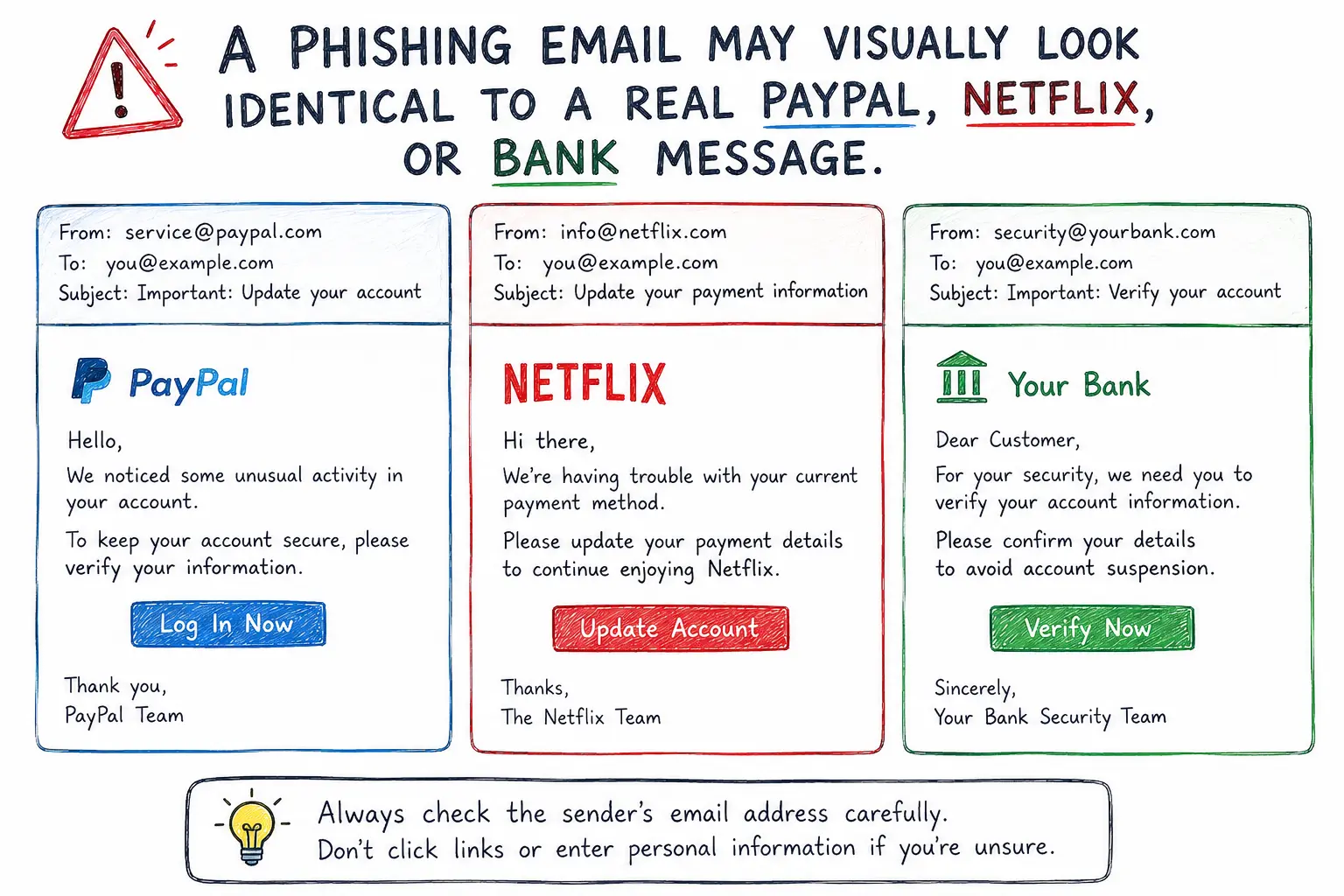
Most phishing attacks share common warning signs.
- Urgent or threatening language
- Suspicious links or domains
- Spelling and grammar mistakes
- Unexpected attachments
- Requests for passwords or verification codes
Real Phishing Examples
Common phishing messages include:
- "Your bank account has been suspended"
- "You missed a package delivery"
- "Suspicious login detected"
- "Your password expires today"
- "Confirm your payment information"
How Fake Login Pages Work
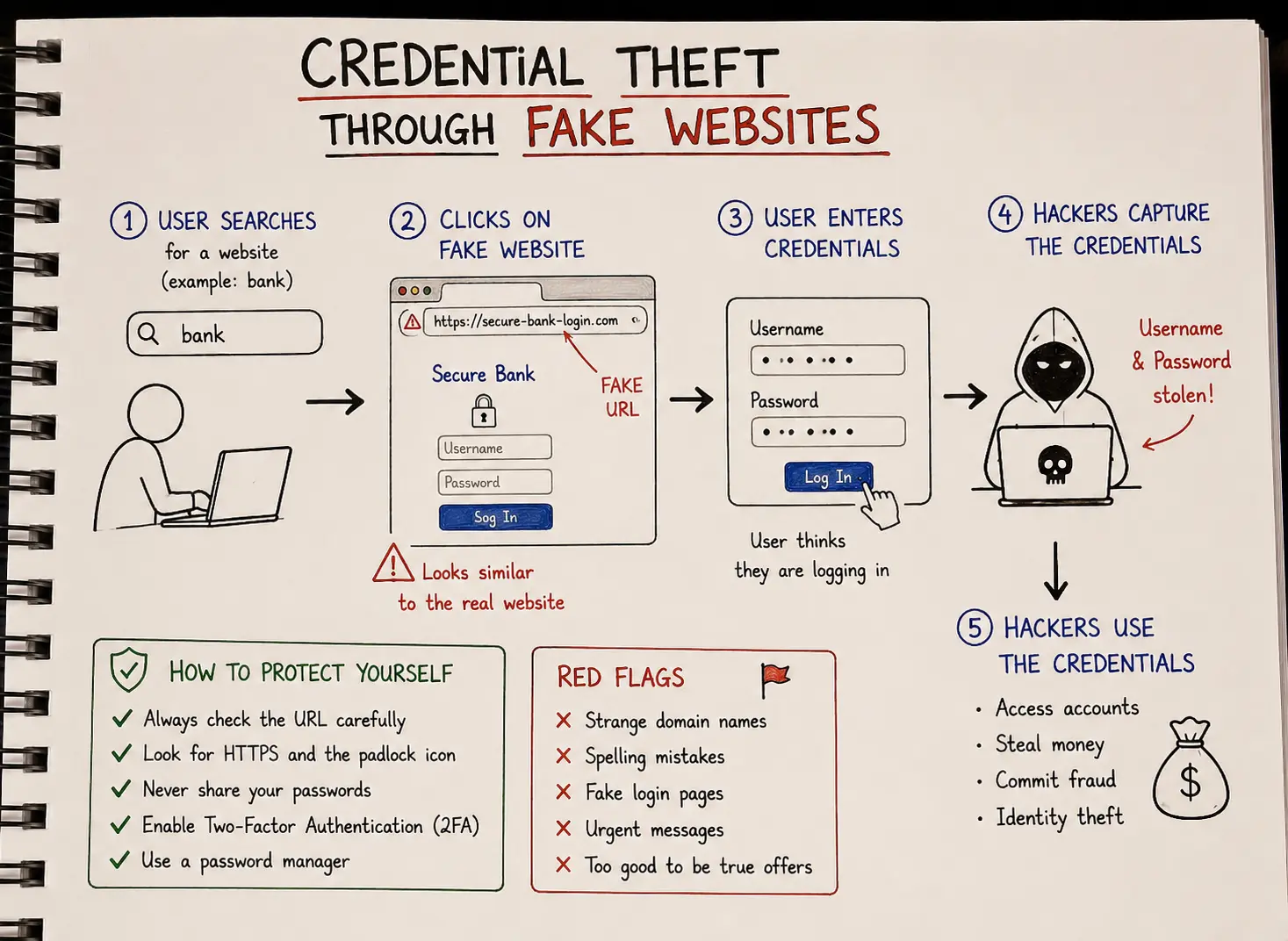
Attackers create websites that imitate real services.
Victims believe they are logging into:
- PayPal
- Banking apps
- Cloud storage services
Once credentials are entered, attackers instantly steal them.
How To Avoid Phishing Attacks
- Never click suspicious links
- Type important URLs manually
- Enable two-factor authentication
- Use strong unique passwords
- Verify senders independently
- Be cautious with urgent messages
Good security habits dramatically reduce phishing risk.
Best Protection: Use Security Software
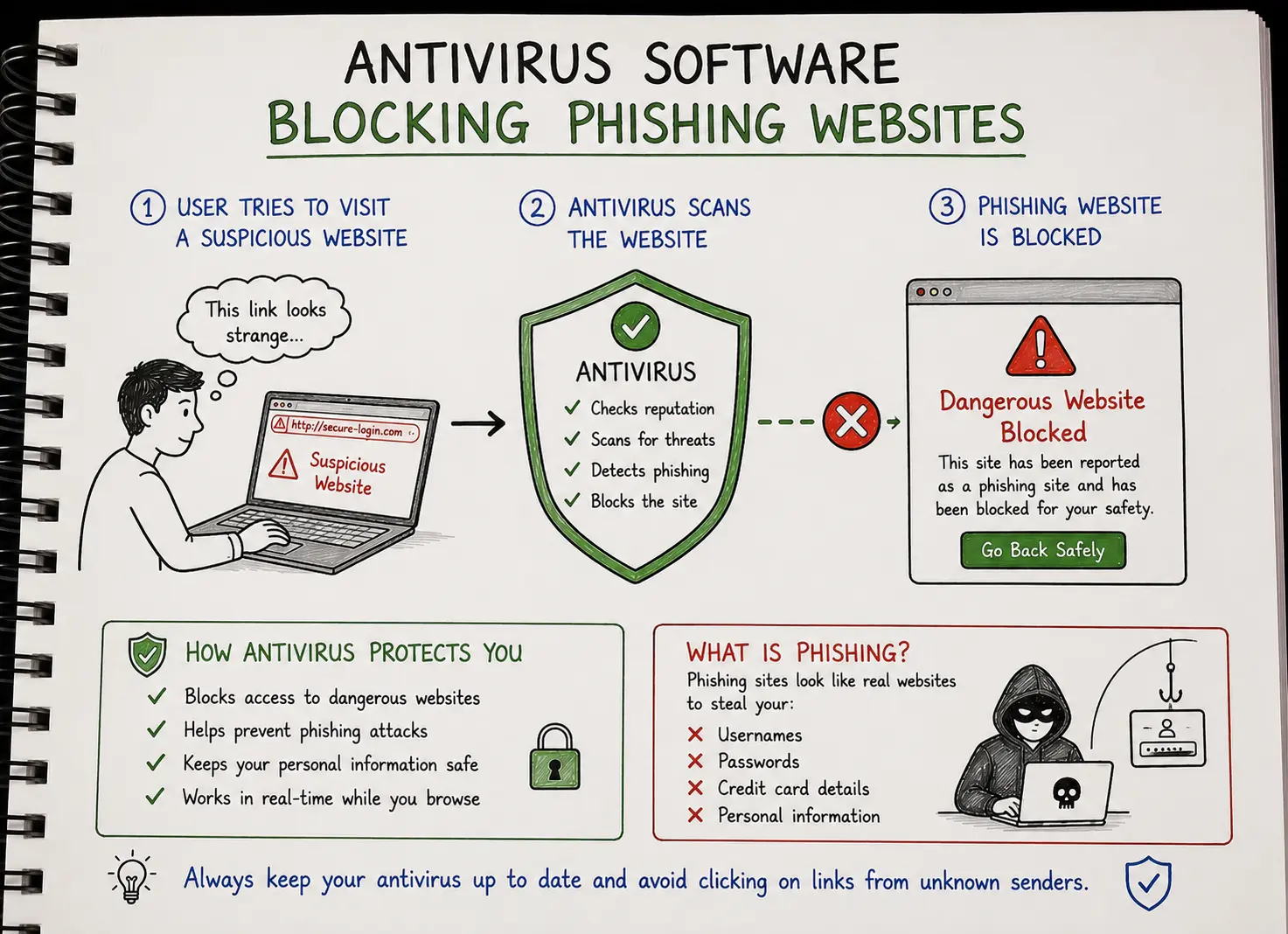
Modern security software can detect:
- Malicious websites
- Phishing pages
- Suspicious downloads
- Credential theft attempts
Extra Protection Tips
- Use a password manager
- Keep browsers updated
- Avoid downloading unknown attachments
- Use browser phishing protection
- Never share verification codes
Phishing on Mobile Devices
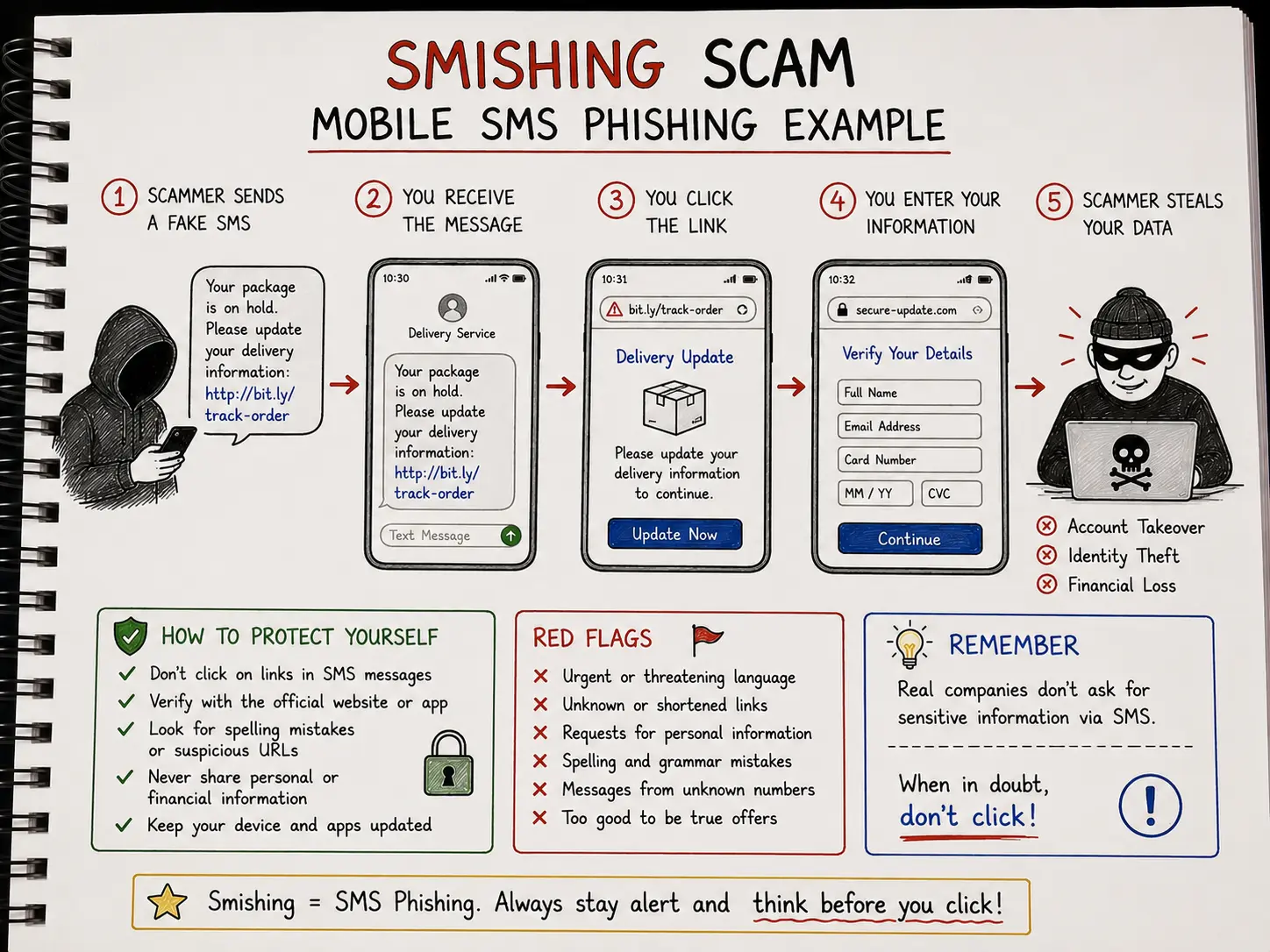
Mobile phishing attacks are increasing rapidly.
Attackers frequently use:
- Fake package tracking SMS
- Banking alerts
- WhatsApp impersonation scams
- QR code phishing
Smaller screens make suspicious URLs harder to identify.
What To Do If You Clicked a Phishing Link
- Disconnect from the website immediately
- Change affected passwords
- Enable 2FA
- Scan your device for malware
- Monitor account activity
Quick action can prevent major damage.
Final Verdict
Phishing attacks are becoming more advanced, personalized, and harder to detect.
Awareness, strong passwords, 2FA, and security software remain the best defenses against phishing in 2026.
Most phishing attacks succeed because users act too quickly without verifying links or requests.
How We Evaluated This Guide
We evaluated this guide for security, privacy, usability, pricing, features, and real-world usefulness so readers can make better decisions.
Alternative Options
We also compare this topic with relevant alternatives to help you decide whether it is the best choice for your needs.
Common Security Myths
Myth
iPhones cannot get malware.
Reality
iPhones are harder to compromise than many devices, but phishing, malicious profiles, scam apps, and account takeover still affect iOS users.
Myth
Android is automatically insecure.
Reality
Modern Android can be secure when updated, locked down, and used with trusted apps from reputable sources.
What Security Experts Recommend
- Use a reputable password manager for unique passwords and secure vault storage.
- Adopt passkeys on important accounts when available, but keep recovery methods protected.
- Enable two-factor authentication, preferably with an authenticator app or security key.
- Install operating system, browser, and app updates promptly.
- Review app permissions, browser extensions, and account recovery options every few months.
Best Security Tools

Bitdefender
Malware protection and device security
9.5

NordPass
Password managers, passkeys, secure sharing
9.3

NordVPN
VPN privacy, public Wi-Fi, streaming
9.6

Incogni
Personal data removal and broker opt-outs
9.2
Frequently Asked Questions
What is How to Avoid Phishing Attacks (2026 Guide)?
How to Avoid Phishing Attacks (2026 Guide) is a practical guide that explains the main benefits, risks, and best practices for using security tool technology safely.
How does How to Avoid Phishing Attacks (2026 Guide) help protect privacy?
This guide highlights how How to Avoid Phishing Attacks (2026 Guide) reduces tracking, secures personal data, and helps you stay safe online.
Who should read this guide?
This guide is useful for beginners and experienced users who want clear advice on security, privacy, and practical online protection.
What are the main risks covered in this guide?
The guide covers common risks such as unsecured Wi-Fi, weak passwords, data leaks, and privacy exposures.
What should I do after reading this guide?
After reading, use the recommended steps and tools to improve your online privacy, strengthen passwords, and secure your devices.