Mobile Cybersecurity Guide (2026)
A practical guide to smartphone security, mobile cyber threats, and protecting your personal data in 2026.
Updated May 2026Reviewed by StaySecureHub Editorial TeamEditorial review
Quick Answer
A practical guide to smartphone security, mobile cyber threats, and protecting your personal data in 2026. This guide explains the main benefits, risks, and practical steps readers need to stay secure online in 2026.
Quick Summary
- Smartphones are now one of the main cyberattack targets
- Smishing and fake apps are rapidly increasing
- Public Wi-Fi exposes mobile devices to interception attacks
- Basic security habits prevent most smartphone compromises
Mobile cyber threats are growing rapidly in 2026.
Modern smartphones contain banking apps, passwords, emails, personal photos, and sensitive private data — making them valuable targets for cybercriminals.
Most mobile attacks now focus on phishing, fake apps, scams, and account theft rather than traditional “viruses.”
[[image:mobile-security|Mobile cybersecurity and smartphone protection]]Why Smartphones Are Prime Targets
Today’s phones store massive amounts of valuable data, including:
- Banking and payment apps
- Saved passwords
- Social media accounts
- Private photos and files
- Work emails and documents
Because smartphones are always connected, attackers constantly target them through SMS, apps, emails, and public Wi-Fi networks.
Most Common Mobile Cyber Threats
| Threat | Goal | Risk |
|---|---|---|
| Smishing | Steal credentials through SMS | High |
| Fake apps | Install malware or spyware | Very High |
| Public Wi-Fi attacks | Intercept data traffic | High |
| Fake support calls | Social engineering | Medium |
| Tracking apps | Collect personal data | Medium |
Smishing Attacks (SMS Phishing)
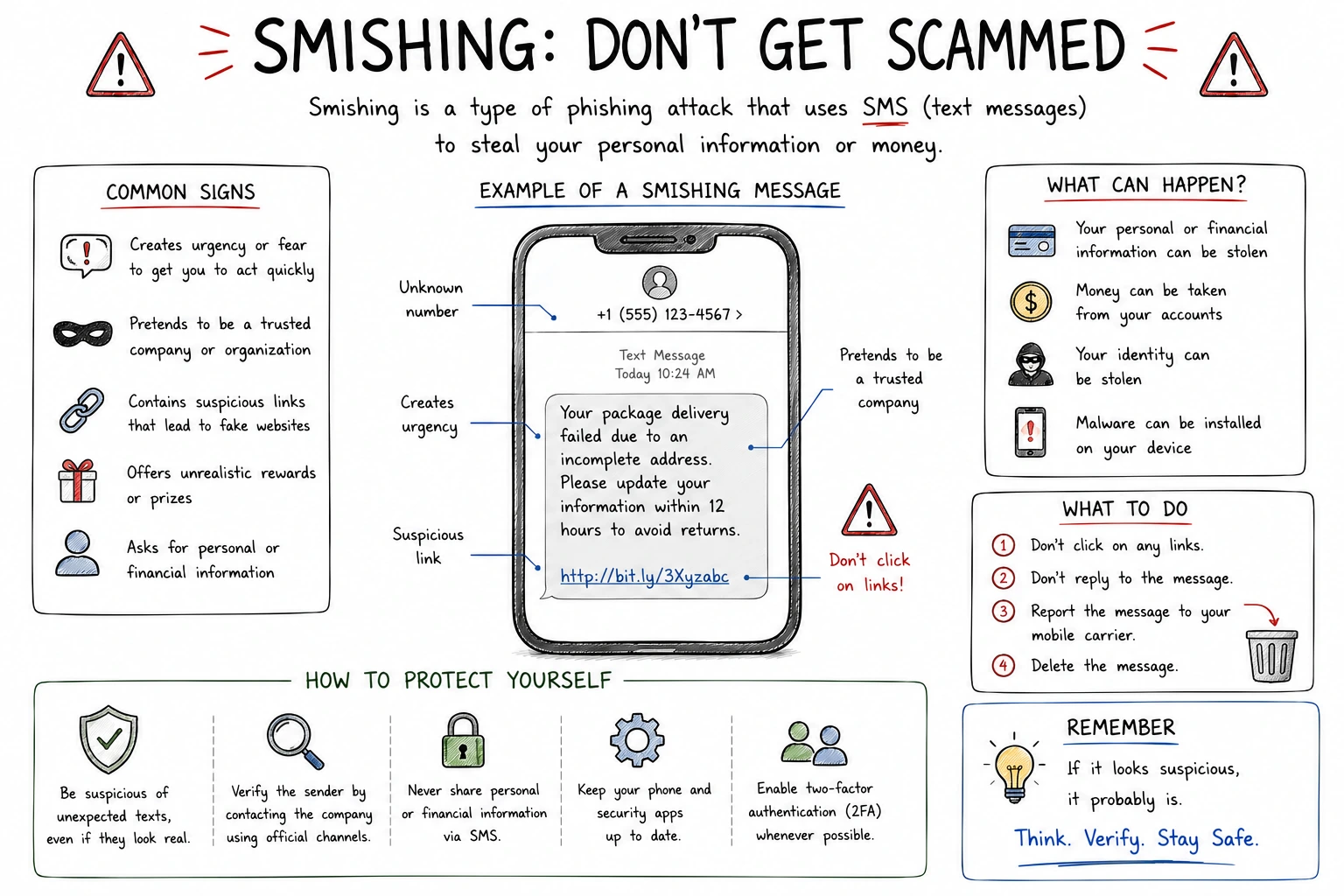
Smishing is one of the fastest-growing mobile attacks.
Victims receive fake SMS messages pretending to be:
- Banks
- Delivery companies
- Government agencies
- Streaming services
- Mobile carriers
These messages often create urgency:
- "Your package is delayed"
- "Your account was suspended"
- "Payment verification required"
Once clicked, users may be redirected to phishing websites designed to steal passwords and financial information.
Malicious Apps & Fake Downloads
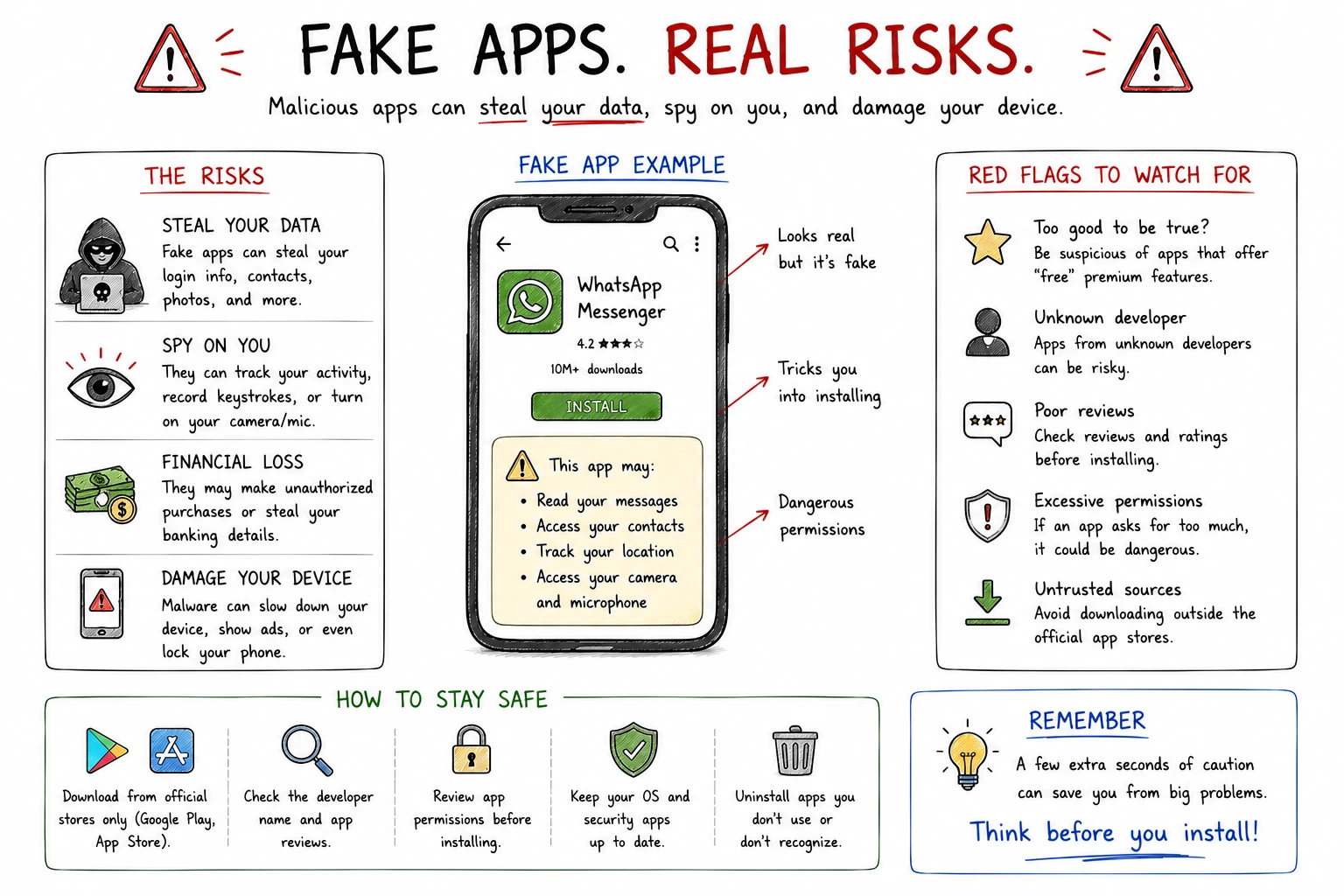
Fake apps are another major mobile threat.
Cybercriminals increasingly publish:
- Fake banking apps
- Counterfeit crypto wallets
- Malware-infected APK files
- Spyware disguised as utilities
These apps may:
- Steal passwords
- Monitor activity
- Record keystrokes
- Access camera and microphone
Public Wi-Fi Risks
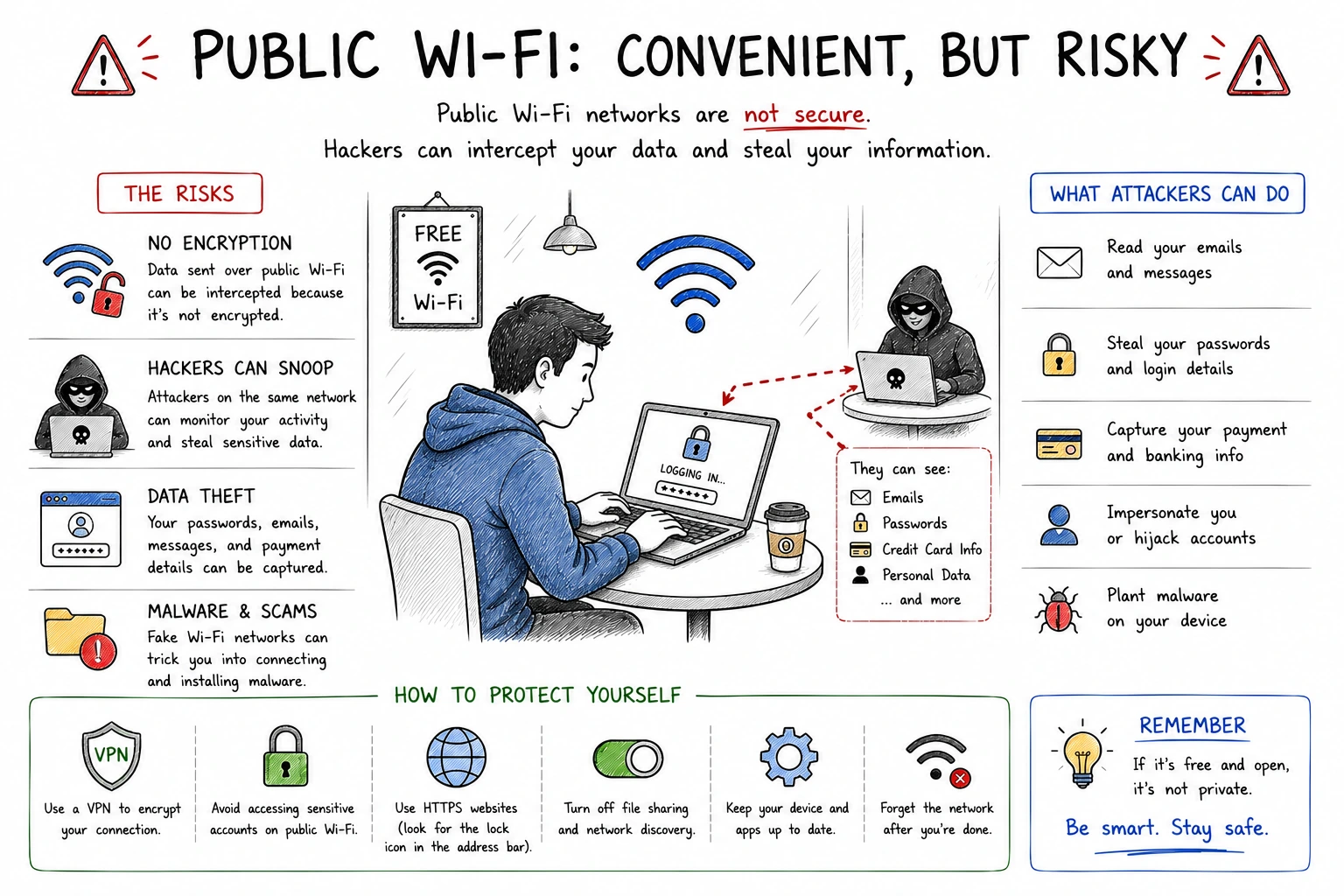
Public Wi-Fi networks are common targets for attackers.
Hackers may create fake hotspots or intercept unencrypted traffic.
This can expose:
- Passwords
- Emails
- Login sessions
- Financial information
Public places with higher risks include:
- Airports
- Hotels
- Cafés
- Shopping centers
How To Protect Your Smartphone
Most mobile attacks are preventable with basic security practices.
Recommended protection steps:
- Keep your phone updated
- Install apps only from official stores
- Enable biometric authentication
- Use strong passwords
- Enable 2FA whenever possible
- Avoid suspicious links
Do You Need Antivirus on Mobile?
Mobile antivirus can add extra protection, especially for Android devices.
Modern mobile security apps help:
- Detect malicious apps
- Block phishing websites
- Warn about suspicious behavior
- Monitor device security
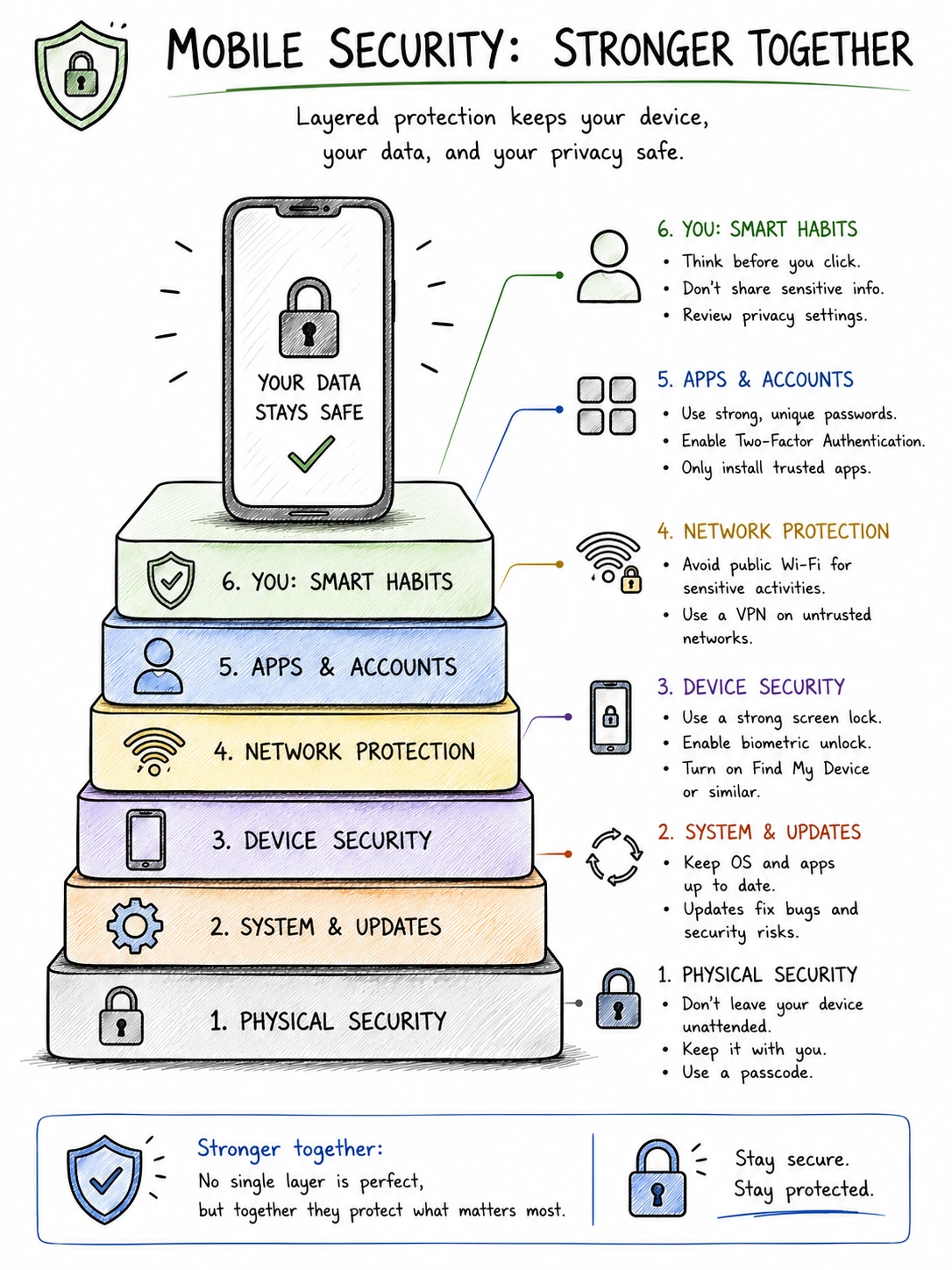
Best Mobile Security Setup
The safest setup combines multiple layers of protection.
- Basic: Updates + strong passwords
- Better: Add 2FA and safe browsing habits
- Advanced: VPN + antivirus + password manager
Common Mobile Security Mistakes
- Clicking unknown SMS links
- Ignoring software updates
- Using weak passwords
- Reusing passwords across apps
- Connecting to unsafe public Wi-Fi
What To Do If Your Phone Is Hacked
- Disconnect from the internet
- Remove suspicious apps
- Change important passwords
- Enable 2FA immediately
- Scan the device for malware
- Monitor financial accounts
Final Verdict
Smartphones are now one of the most targeted devices in modern cybersecurity attacks.
Most mobile compromises happen through phishing, fake apps, and unsafe browsing habits — not sophisticated hacking.
Simple protections like updates, 2FA, safe browsing, and VPN usage dramatically reduce your risk.
How We Evaluated This Guide
We evaluated this guide for security, privacy, usability, pricing, features, and real-world usefulness so readers can make better decisions.
Alternative Options
We also compare this topic with relevant alternatives to help you decide whether it is the best choice for your needs.
Common Security Myths
Myth
iPhones cannot get malware.
Reality
iPhones are harder to compromise than many devices, but phishing, malicious profiles, scam apps, and account takeover still affect iOS users.
Myth
Android is automatically insecure.
Reality
Modern Android can be secure when updated, locked down, and used with trusted apps from reputable sources.
What Security Experts Recommend
- Use a reputable password manager for unique passwords and secure vault storage.
- Adopt passkeys on important accounts when available, but keep recovery methods protected.
- Enable two-factor authentication, preferably with an authenticator app or security key.
- Install operating system, browser, and app updates promptly.
- Review app permissions, browser extensions, and account recovery options every few months.
Best Security Tools

Bitdefender
Malware protection and device security
9.5

NordPass
Password managers, passkeys, secure sharing
9.3

NordVPN
VPN privacy, public Wi-Fi, streaming
9.6

Incogni
Personal data removal and broker opt-outs
9.2
Frequently Asked Questions
What is Mobile Cybersecurity Guide (2026)?
Mobile Cybersecurity Guide (2026) is a practical guide that explains the main benefits, risks, and best practices for using security tool technology safely.
How does Mobile Cybersecurity Guide (2026) help protect privacy?
This guide highlights how Mobile Cybersecurity Guide (2026) reduces tracking, secures personal data, and helps you stay safe online.
Who should read this guide?
This guide is useful for beginners and experienced users who want clear advice on security, privacy, and practical online protection.
What are the main risks covered in this guide?
The guide covers common risks such as unsecured Wi-Fi, weak passwords, data leaks, and privacy exposures.
What should I do after reading this guide?
After reading, use the recommended steps and tools to improve your online privacy, strengthen passwords, and secure your devices.